How Energy Systems Change Progression Speed
Why the same loot table can take hours, days or weeks depending on how energy systems are designed.
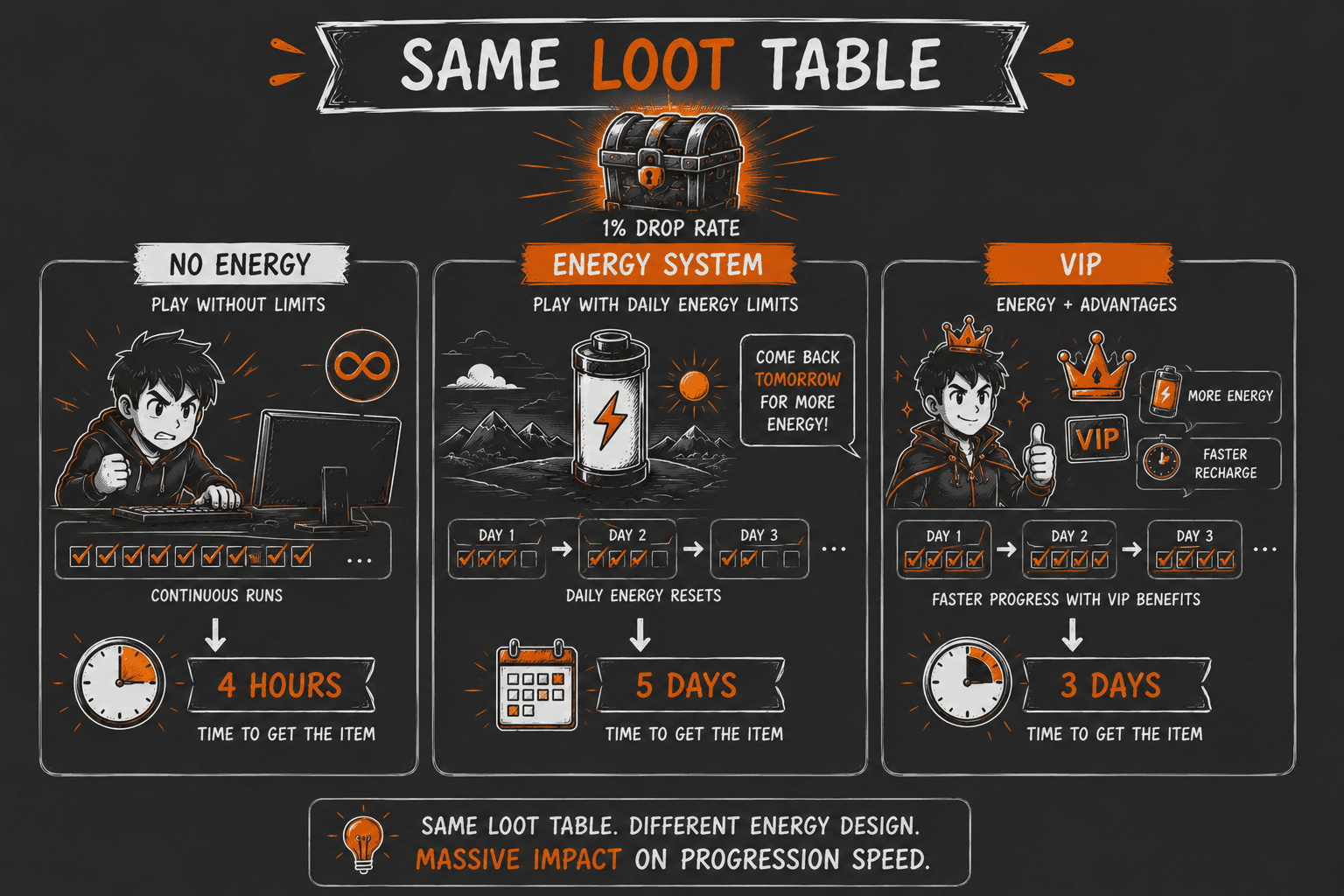
Designers often spend a lot of time balancing drop rates and crafting recipes.
But in many games, the biggest factor affecting progression speed is neither of those systems.
It's energy.
The exact same loot table can lead to completely different player experiences depending on how often players are allowed to perform actions, how quickly energy regenerates, and whether premium systems accelerate progression. In this article, we will explore how energy systems influence progression speed and why balancing drop rates without considering energy often leads to misleading conclusions.
A Loot Table Never Exists Alone
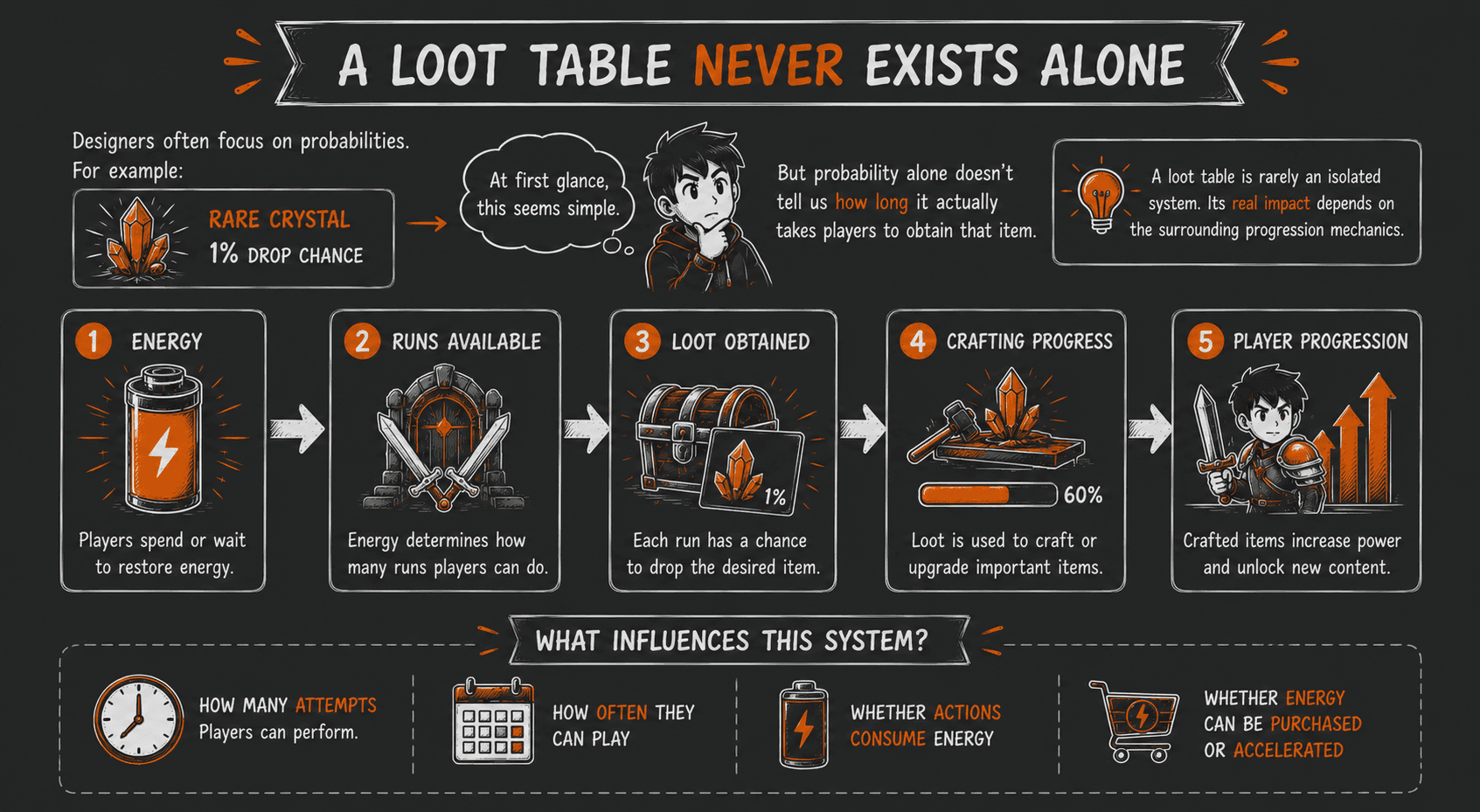
When designers calculate progression, they often focus on probabilities. For example:
Rare Crystal
1% drop chance
At first glance, this seems simple. But probability alone does not tell us how long it actually takes players to obtain that item. To answer that question, we also need to know:
- How many attempts players can perform
- How often they can play
- Whether actions consume energy
- Whether energy can be purchased or accelerated
A loot table is rarely an isolated system. Its real impact depends on the surrounding progression mechanics.
Same Loot Table, Different Outcomes
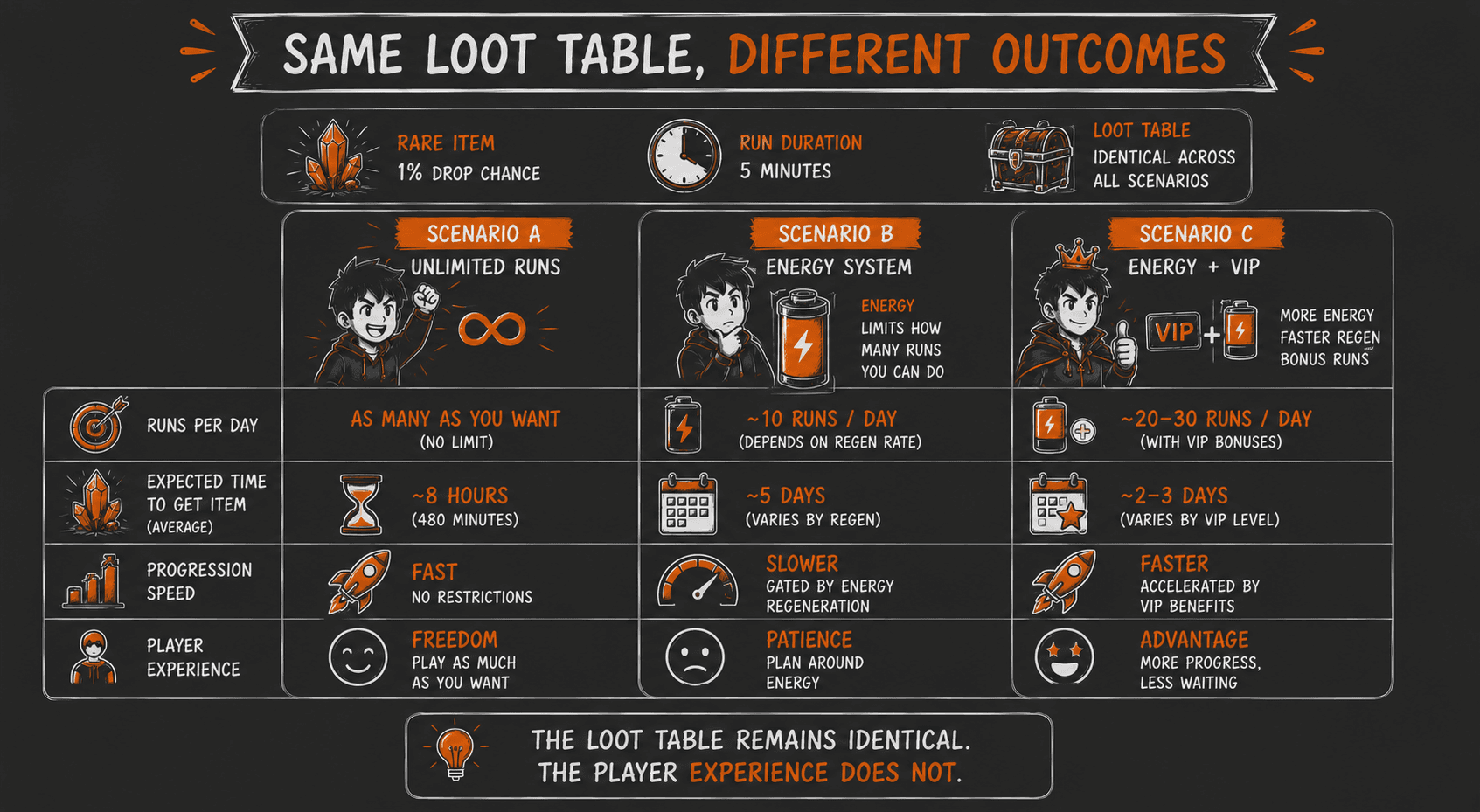
Imagine a rare item with:
Rare item drop chance
1%
Run duration
5 minutes
The probability never changes. Yet the actual progression speed can vary dramatically.
- Without energy restrictions, players can perform as many runs as they want.
- With an energy system, progression becomes gated by regeneration.
- With VIP bonuses, progression accelerates again.
The loot table remains identical. The player experience does not.
Real Examples From Popular Games
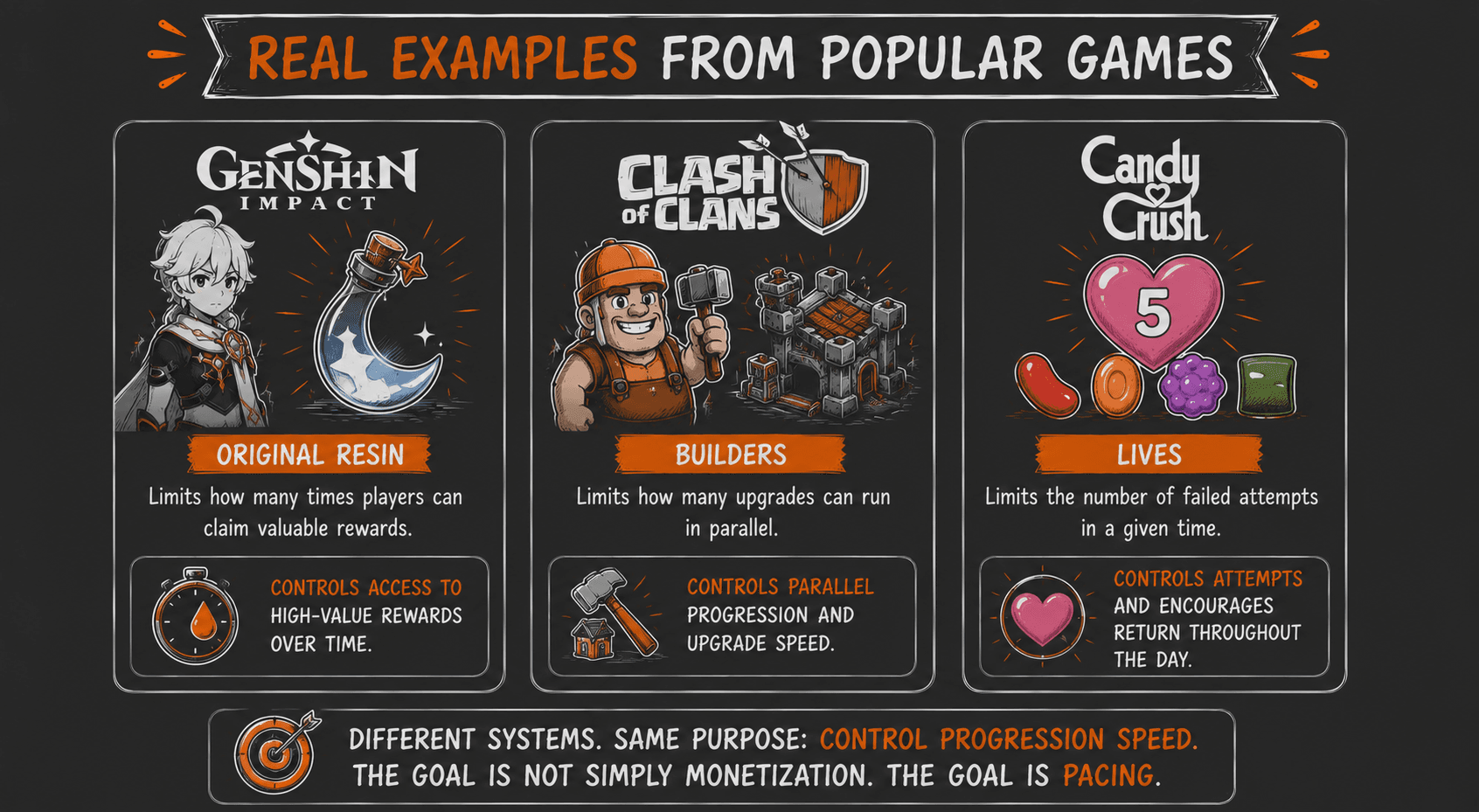
Many successful games use systems that indirectly control progression speed.
- Genshin Impact limits access to valuable rewards through Resin.
- Candy Crush limits the number of failed attempts through lives.
- Clash of Clans limits parallel progression through builders.
Although these systems look different, they all serve a similar purpose: controlling how quickly players progress.
The goal is not simply monetization. The goal is pacing.
Example
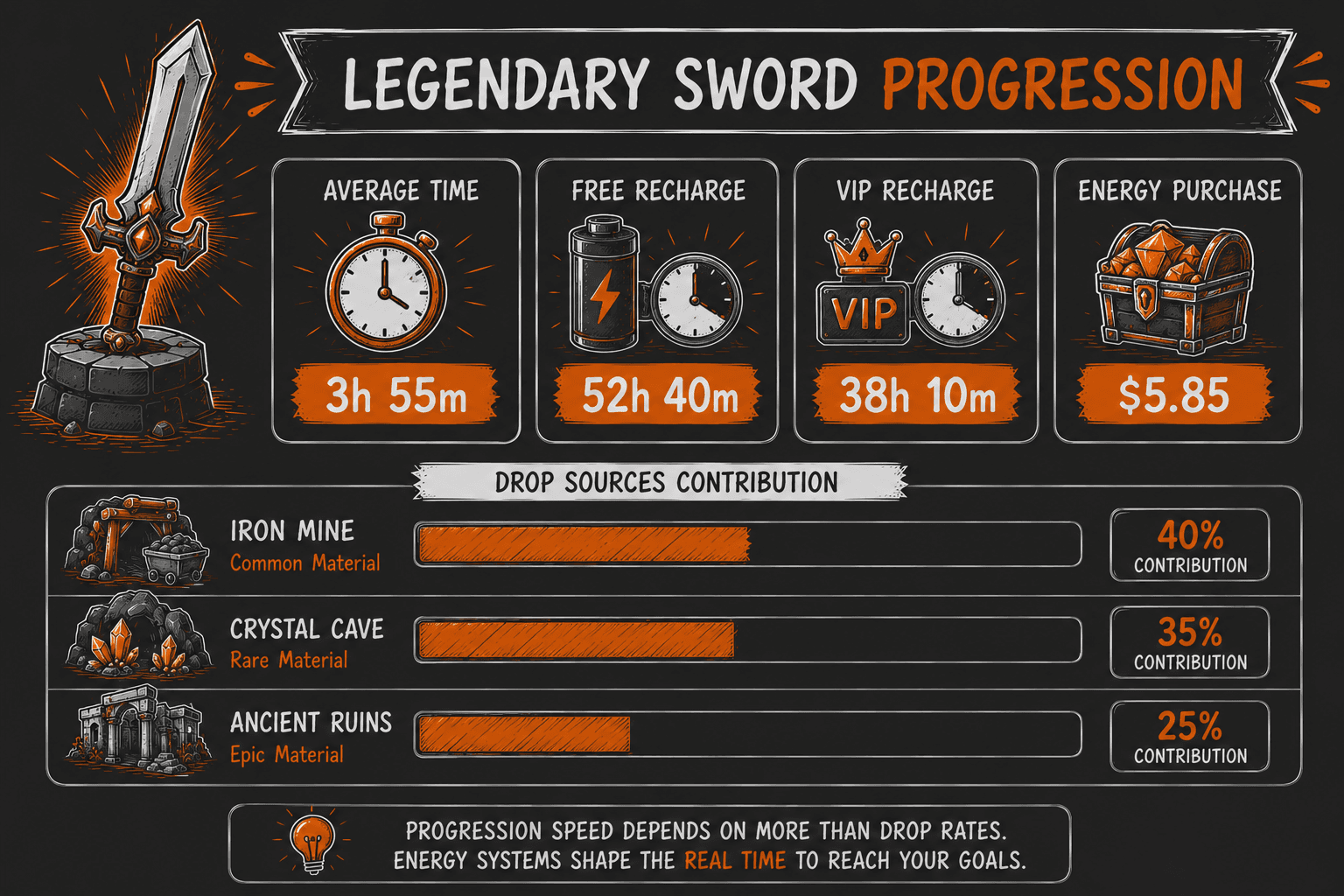
Legendary Sword Crafting Progression
A public LudForge example connecting crafting requirements, loot tables, and energy constraints.
Open crafting exampleTo illustrate this concept, we created a crafting progression example based on a Legendary Sword recipe.
The example combines crafting requirements, loot tables and an energy system to estimate the real time required to obtain the final item. Instead of looking only at drop rates, it shows how progression changes when energy constraints are introduced.
The example includes:
- Average farming time assuming unlimited activity
- Time considering free energy regeneration
- Time considering VIP bonuses
- Estimated cost of bypassing energy limitations through refills
By comparing these values, it becomes clear that progression speed is influenced not only by probabilities and crafting costs, but also by how energy systems regulate player activity.
Why Designers Often Miscalculate Progression
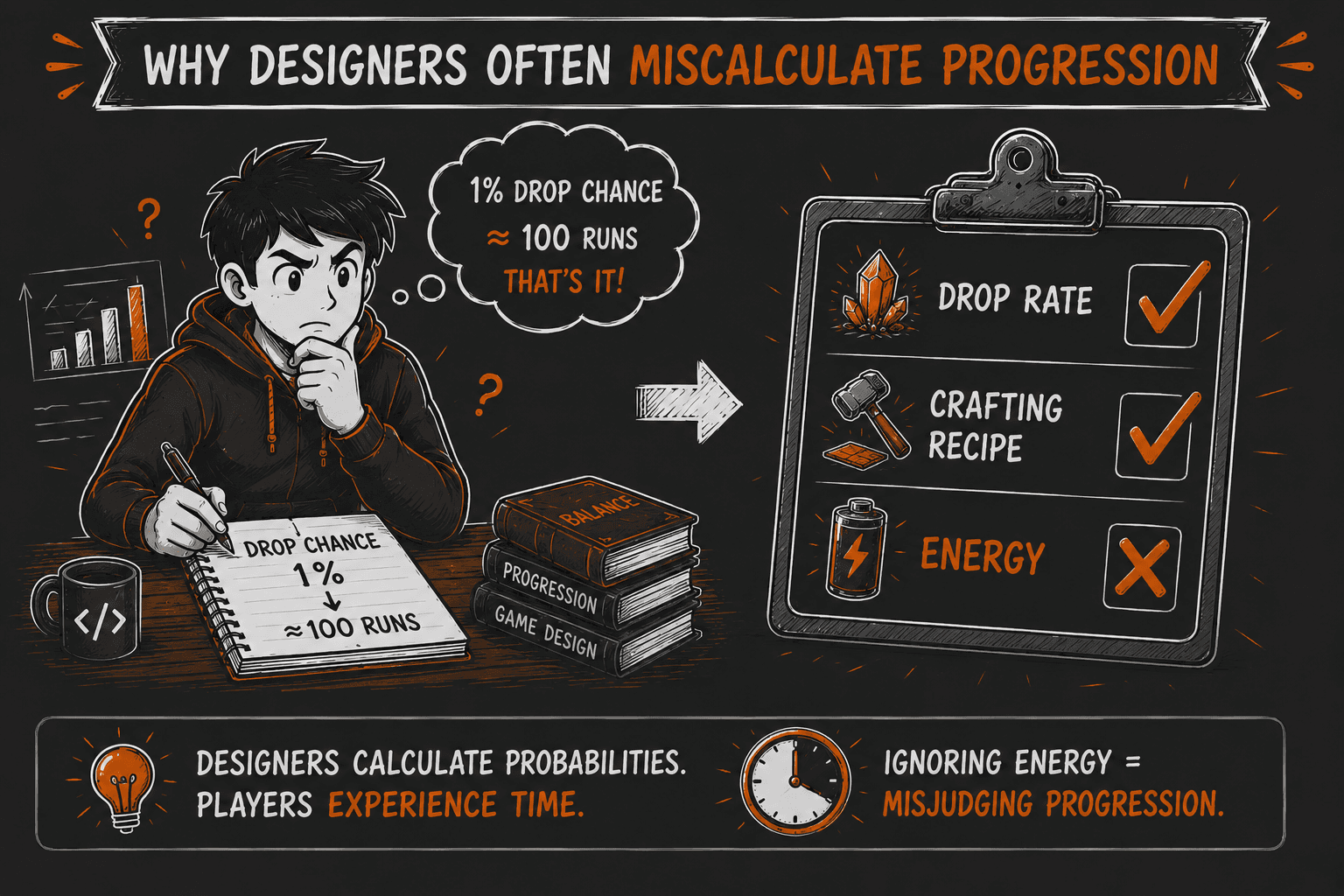
One of the most common balancing mistakes is estimating progression exclusively through probabilities. Designers calculate:
1% drop chance
~100 runs
and stop there.
However, players do not experience probabilities. They experience time.
If those 100 runs can be completed in a single evening, progression feels very different than if they are spread across multiple days due to energy limitations.
The difference is often larger than any adjustment made to the drop rate itself.
Designing Better Progression Systems
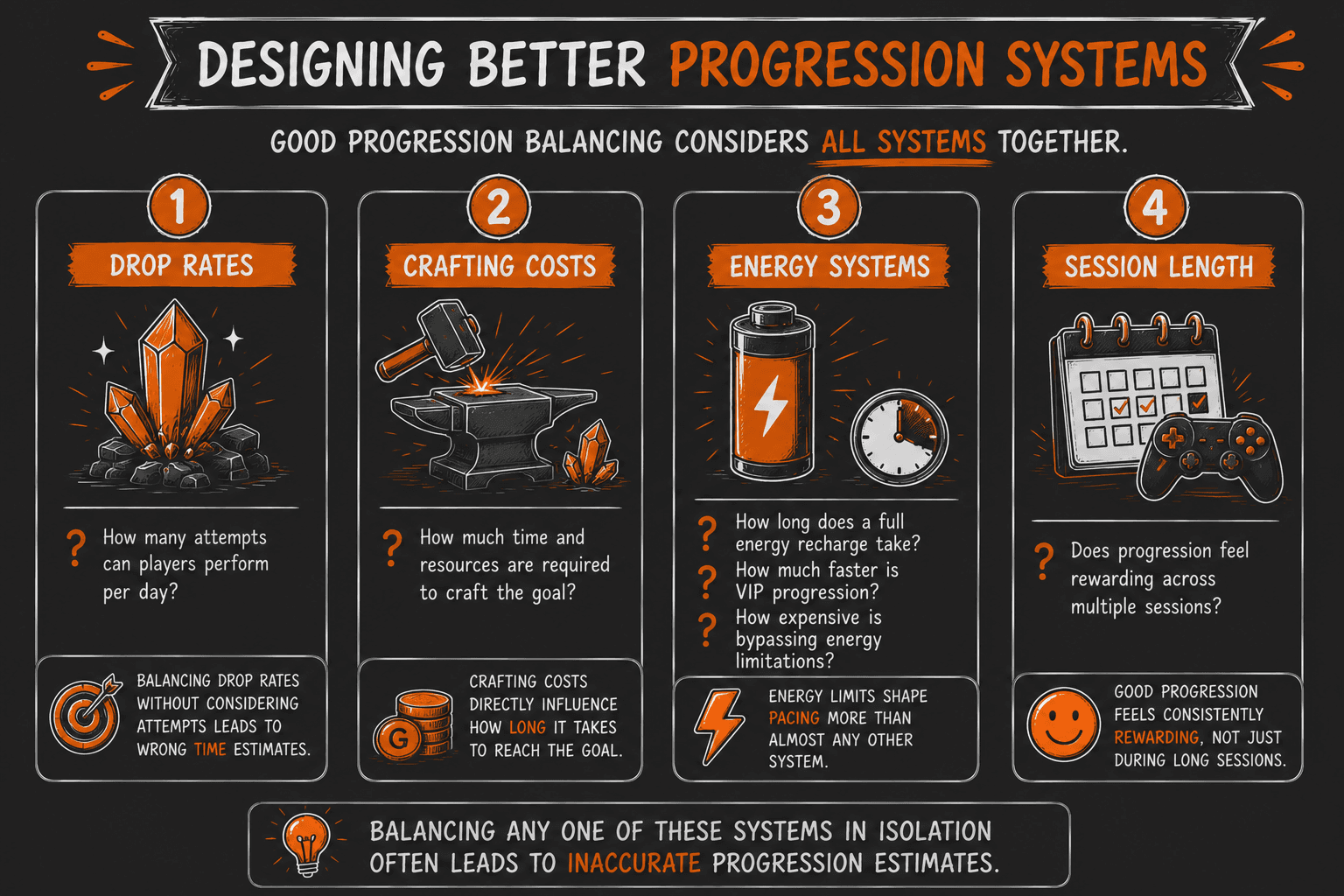
Good progression balancing considers all systems together.
Questions worth asking:
- How many attempts can players perform per day?
- How long does a full energy recharge take?
- How much faster is VIP progression?
- How expensive is bypassing energy limitations?
- Does progression feel rewarding across multiple sessions?
Balancing any one of these systems in isolation often leads to inaccurate progression estimates.
Conclusion
Energy systems are often discussed as monetization mechanics.
But their most important function is controlling progression speed.
The same loot table can create completely different experiences depending on how energy is configured. For designers, this means balancing progression requires looking beyond probabilities and considering the entire loop: energy, rewards, crafting and player goals.
When these systems are balanced together, progression becomes predictable, measurable and easier to tune. Understanding this relationship is one of the most effective ways to design progression systems that feel fair, engaging and sustainable over time.
Explore the practical example
Open the Legendary Sword crafting example to see how energy changes the real progression timeline.