How to Balance Loot Tables: A Practical Guide for Game Designers
Loot table balance is not just about assigning percentages. Good reward systems consider player perception, acquisition frequency, progression, and the expected time needed to reach important goals.
One of the fastest ways to frustrate players is to create a poorly balanced loot table.
Rare items that never seem to appear, common rewards with no value, or progression paths that depend entirely on luck can turn a fun mechanic into a constant source of frustration.
The challenge is that balancing loot tables goes far beyond defining percentages. Good reward systems consider player perception, acquisition frequency, progression, and the expected time needed to reach important goals. In this article, we will explore core loot table balancing principles and analyze an example inspired by Warframe Relics.
What does a loot table really control?
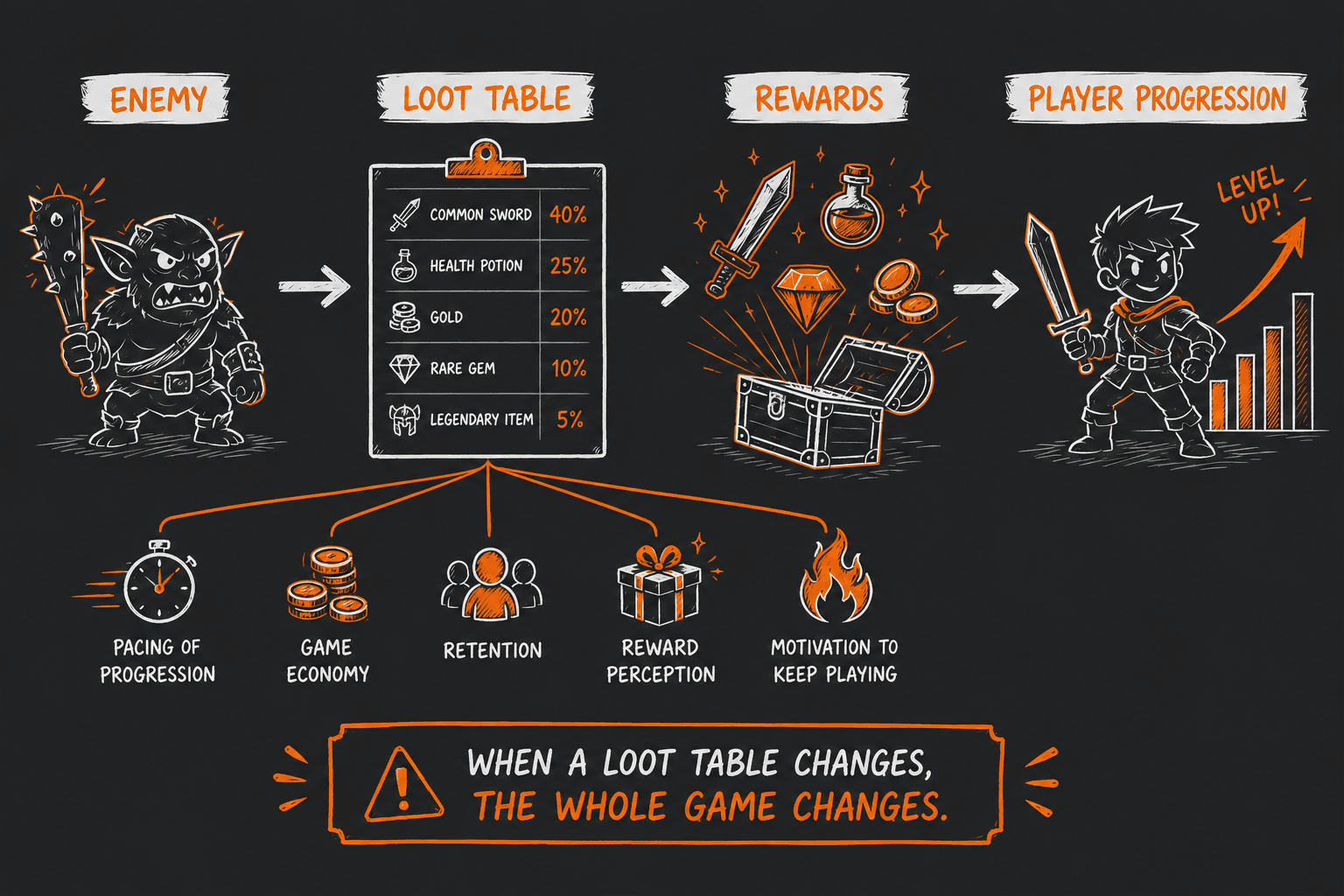
Many designers see loot tables as lists of items and probabilities. In practice, they control:
- progression speed
- the game economy
- retention
- reward perception
- motivation to keep playing
When a loot table changes, the whole game changes.
Mistake #1: Balancing only by looking at percentages
Example
Legendary Sword
1% drop chance
At first glance, that can look reasonable. But what does it actually mean in practice?
After 10 attempts
~9.6%
After 50 attempts
~39.5%
After 100 attempts
~63.4%
The player experience is defined by the number of attempts required, not only by the value displayed in the table.
Mistake #2: Ignoring the time required
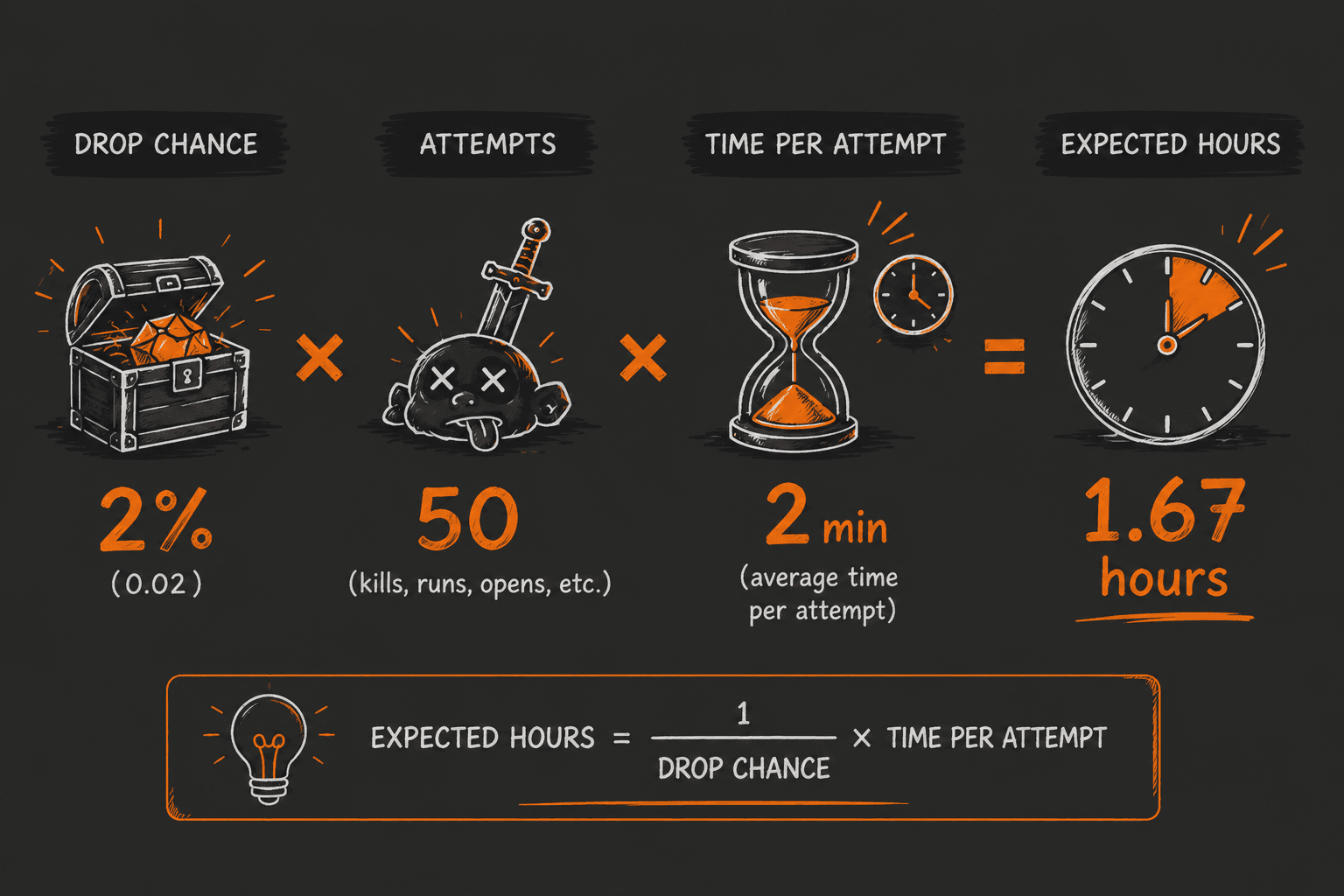
A 1% chance can be acceptable if each attempt takes 30 seconds.
The same chance can become frustrating if each attempt takes 20 minutes.
Always convert probabilities into expected time.
- How many attempts are required?
- How long does each attempt take?
- How many play sessions does that represent?
Case Study: Warframe Relic Rewards
Warframe Relic Reward System
A simplified loot table inspired by Warframe Relic rewards.
Open loot tableTo visualize these concepts in practice, we recreated a simplified version of the Warframe Relic reward system.
- individual probabilities
- rarities
- reward distribution
- the impact of different drop chances
What makes a loot table satisfying?
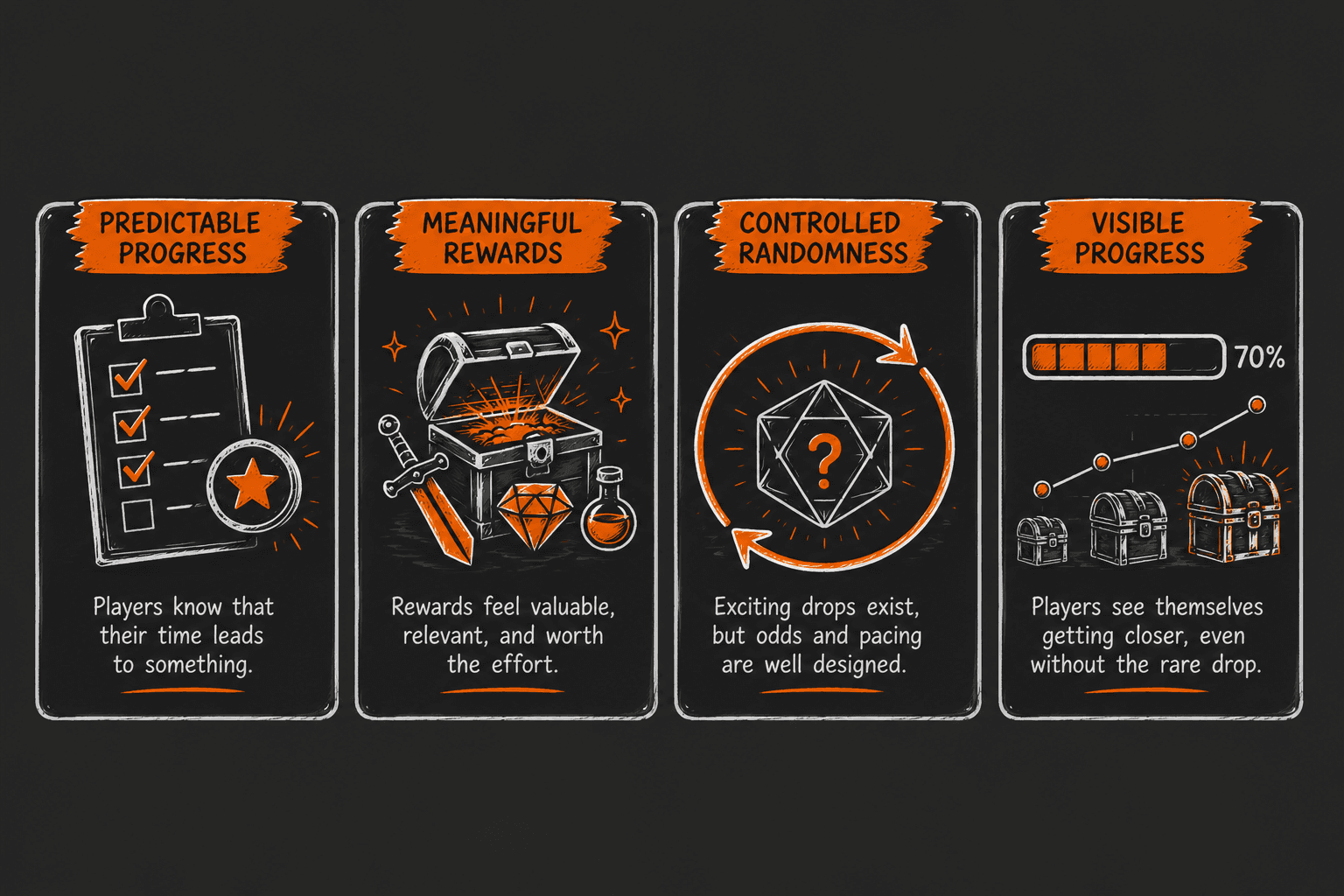
Players accept bad luck. What they do not accept is feeling that they are not making progress.
Good loot tables usually combine:
- frequent rewards
- medium-term goals
- aspirational rare items
- some form of progress even without the desired drop
Balancing Checklist
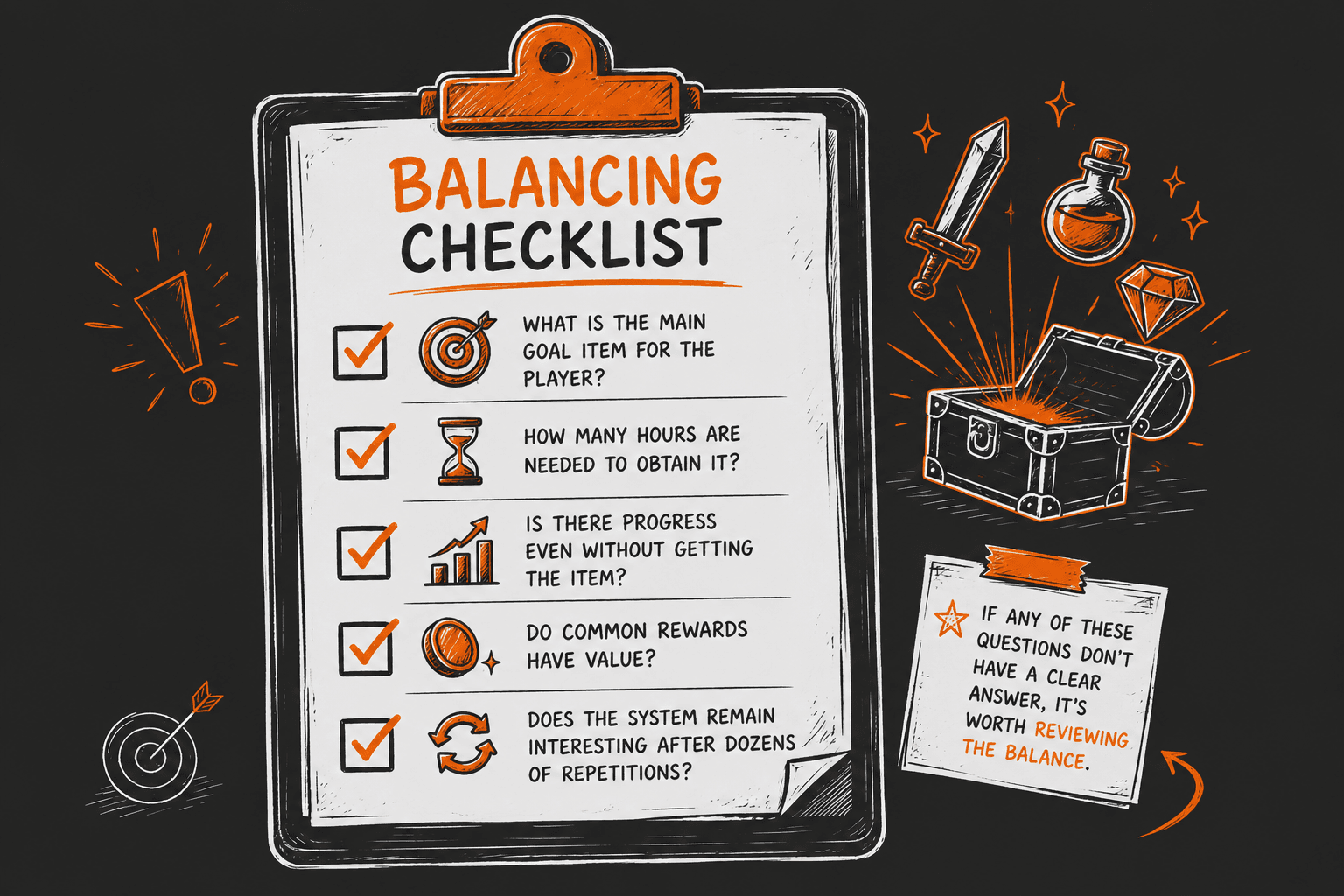
Before publishing a loot table, try to answer:
If any of these questions does not have a clear answer, the balance is worth revisiting.
Conclusion
Balancing loot tables is not just about distributing percentages.
The goal is to control the player experience, creating progression that feels fair, rewarding, and motivating over time.
Small probability changes can create huge effects on economy and retention, which is why visualization and simulation tools are so valuable during the design process.
Explore the practical example
Open the simplified Warframe Relic reward table to see the example values.