Designing Reward Systems Players Actually Feel
Why two games with identical drop rates can create completely different player experiences, and how to design rewards around perception instead of probability.
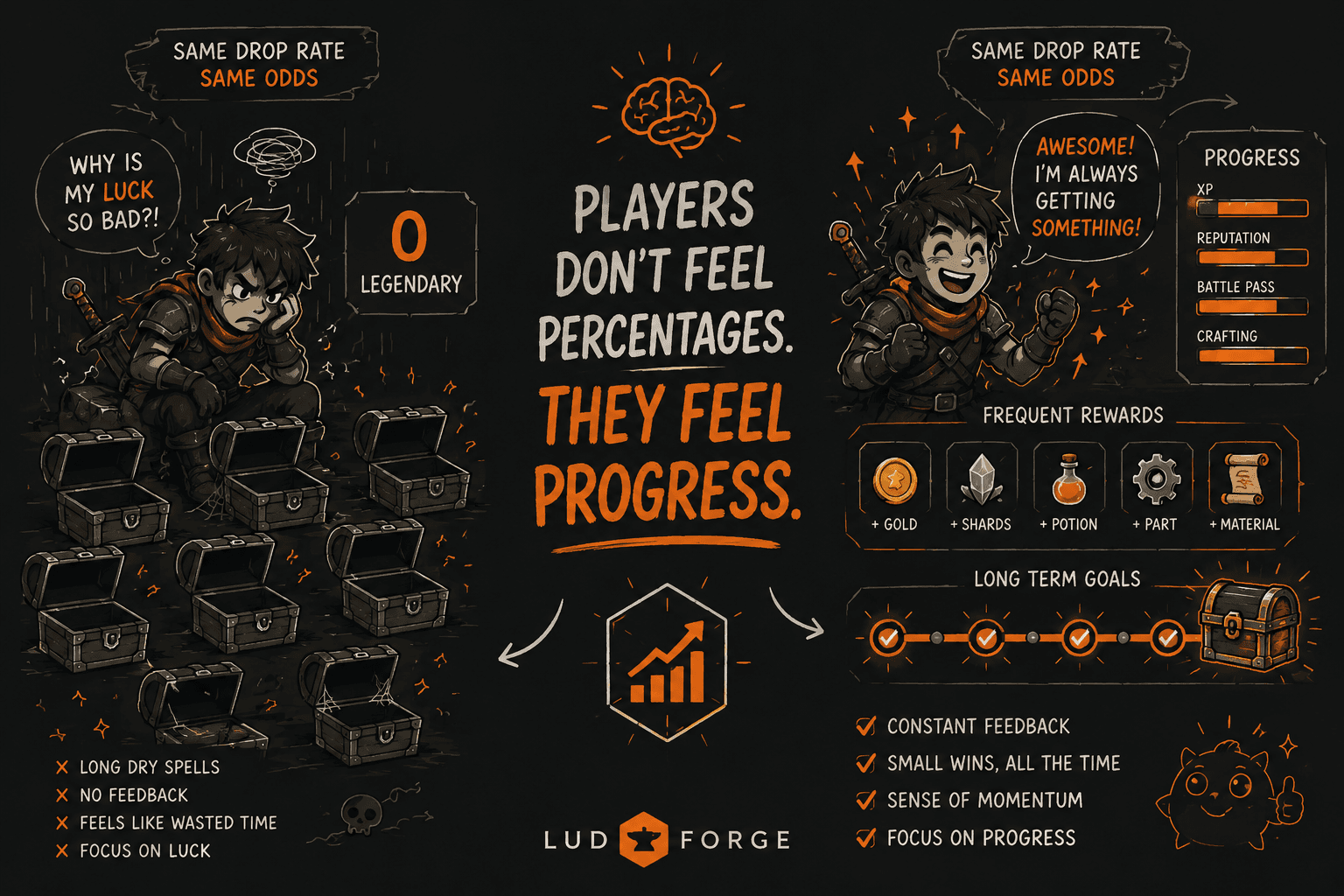
Many developers spend hours balancing percentages.
5%. 10%. 0.5%.
Hours are spent tweaking numbers, running simulations and searching for the perfect drop rate.
But players rarely experience percentages. They experience emotions.
They remember long losing streaks. They celebrate lucky moments. They notice when progress feels meaningful. And they quickly lose motivation when rewards feel invisible.
Great reward systems are not just mathematically balanced. They are psychologically balanced.
Players don't remember your drop rates. They remember how your game made them feel.
Players Don't Feel Probability
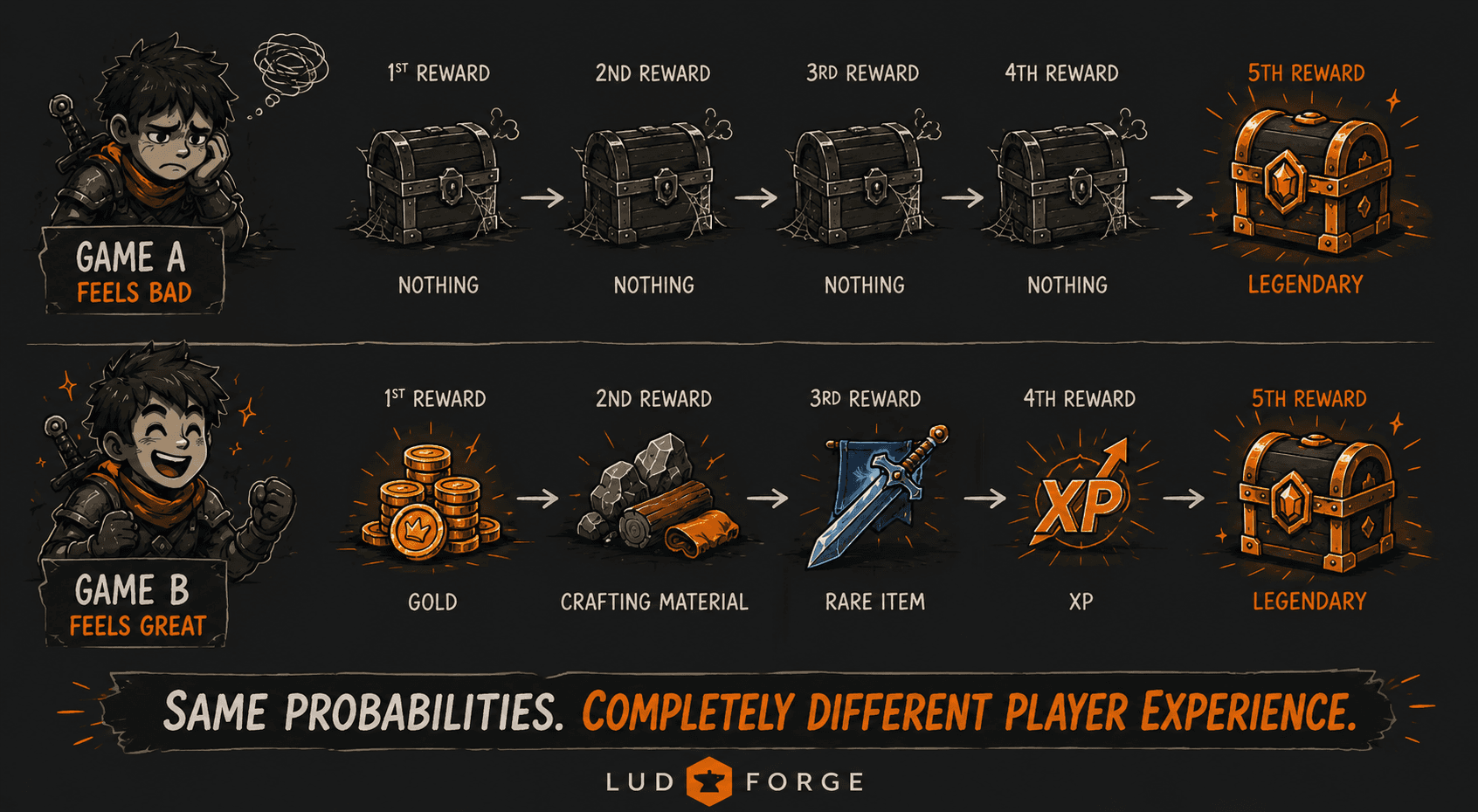
Imagine two games.
Both have exactly the same legendary drop rate. Exactly 5%. Mathematically, they are identical.
But the player experience couldn't be more different.
In the first game, players open several chests in a row without receiving anything meaningful. Every attempt feels empty, and every failure reinforces the feeling that the game is unfair.
In the second game, players constantly receive something useful.
Small amounts of gold, crafting materials, experience, reputation, upgrade components or uncommon items keep appearing between the big rewards.
The legendary item still takes roughly the same amount of time to obtain.
The difference is that the journey never feels empty.
Players don't evaluate probability tables. They evaluate how each session feels.
Frequency Matters More Than Size
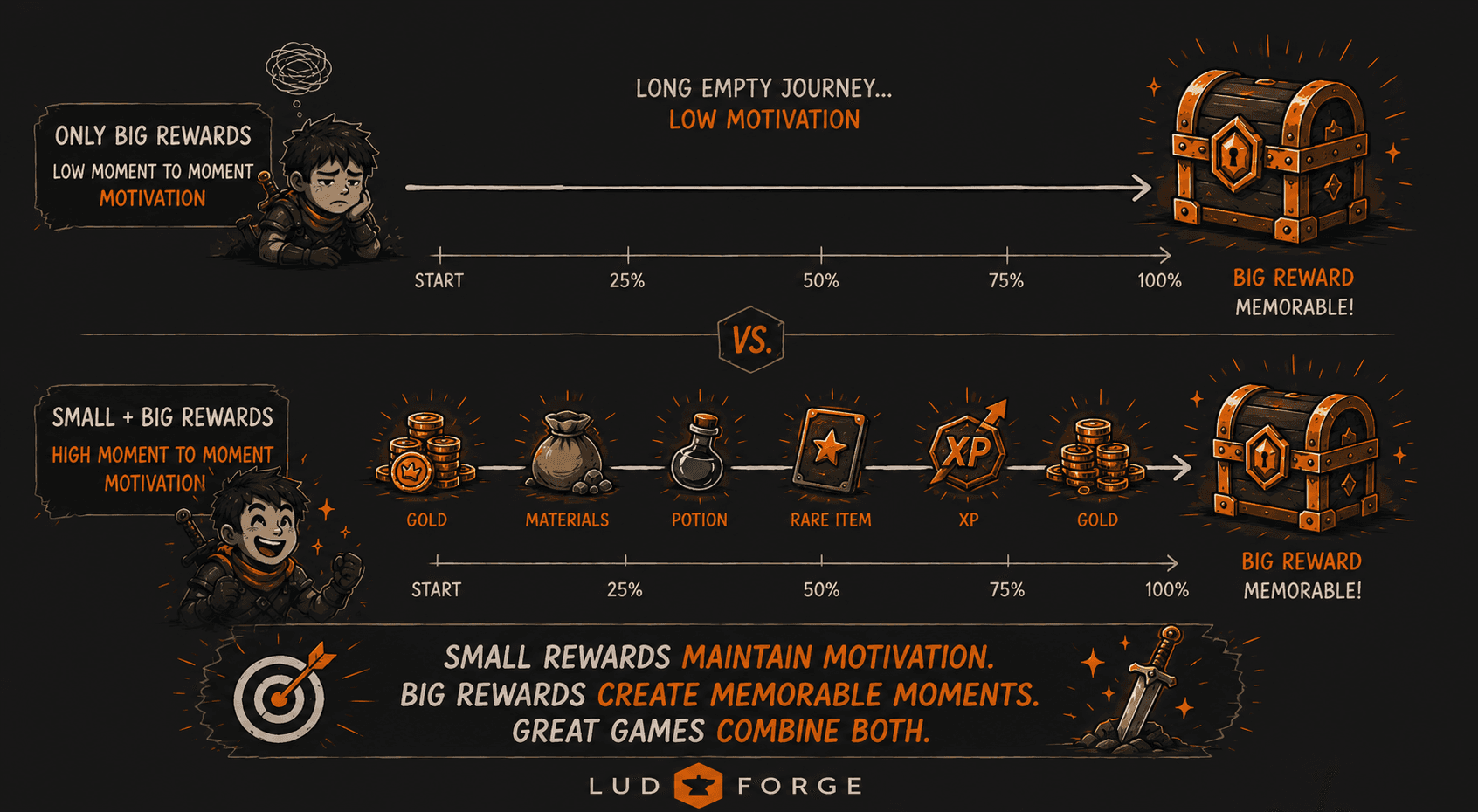
One of the biggest mistakes in reward design is assuming that bigger rewards automatically create more excitement.
In reality, players often value frequent progress more than rare explosions of progress.
This is why many successful games constantly reinforce the player's actions.
Every enemy drops something. Every mission grants experience. Every session unlocks new crafting materials. Every activity pushes a progression bar forward.
These small victories create momentum.
They reassure players that their time is being converted into progress, even if the ultimate goal is still far away.
Games like Diablo, Warframe and Vampire Survivors are excellent examples of this philosophy.
Their biggest rewards may be rare, but players are constantly receiving feedback that they are moving forward.
The legendary drop becomes memorable because the journey leading to it was already rewarding.
Streaks Shape Player Memory
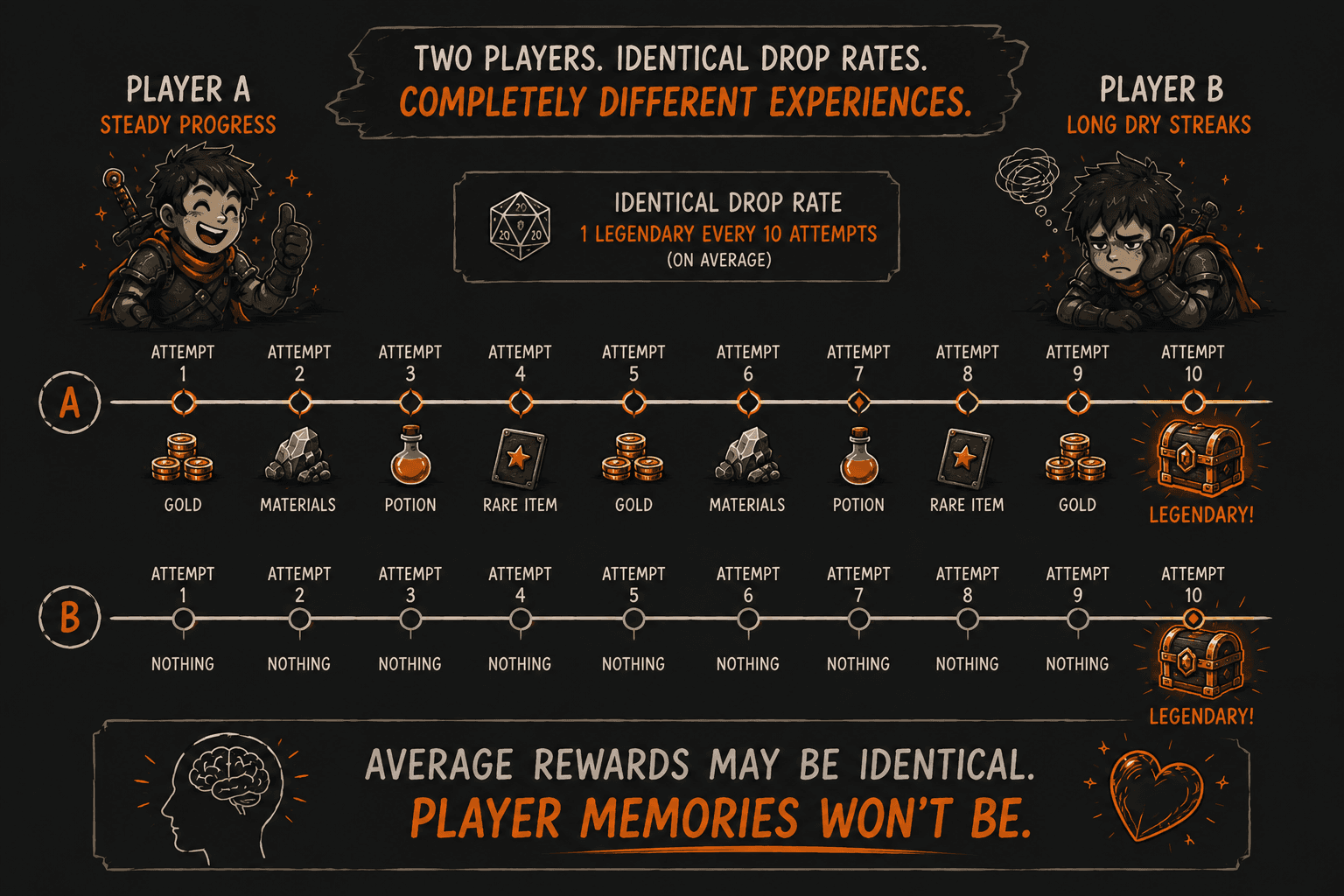
Players rarely remember averages.
They remember streaks.
Nobody tells their friends that they received exactly the expected number of legendary items after one thousand runs.
Instead they say they killed a boss twenty times and got absolutely nothing.
Randomness naturally creates variance.
Variance creates streaks.
And streaks often create frustration.
This is why many modern games quietly introduce systems that protect players from extremely unlucky situations.
Guaranteed rewards, pity systems, bad luck protection and progressive drop chance adjustments do not necessarily increase the average reward.
Instead, they reduce the emotional impact of unlucky streaks. Designing around perception often matters more than designing around mathematics.
Energy Systems Shape Reward Timing
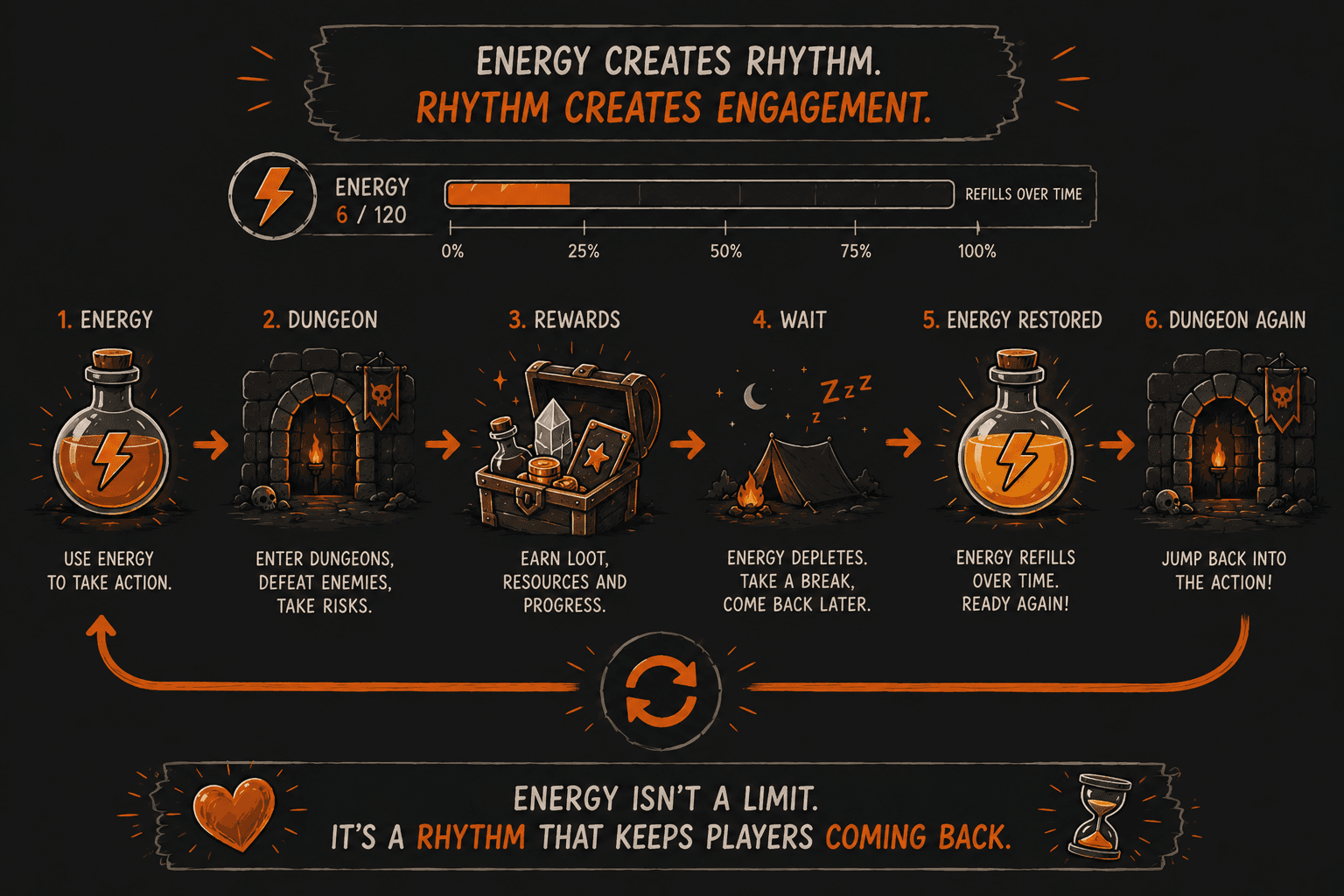
Reward systems are not only about what players receive.
They are also about when players receive it.
This is where energy systems become incredibly powerful.
Many developers see energy simply as a limitation. In reality, it is a pacing system.
A well-designed energy mechanic controls the rhythm of progression.
It creates anticipation. It encourages players to return later. It transforms one long session into multiple satisfying sessions throughout the day.
For example, imagine a dungeon that costs 20 Energy.
Players can complete five runs immediately before needing to wait for regeneration.
Each completed dungeon feels valuable because every run consumes a limited resource.
When regeneration is well balanced, players leave wanting one more run instead of feeling exhausted.
A good energy system creates habits. A bad one creates frustration.
Great Reward Systems Combine Both
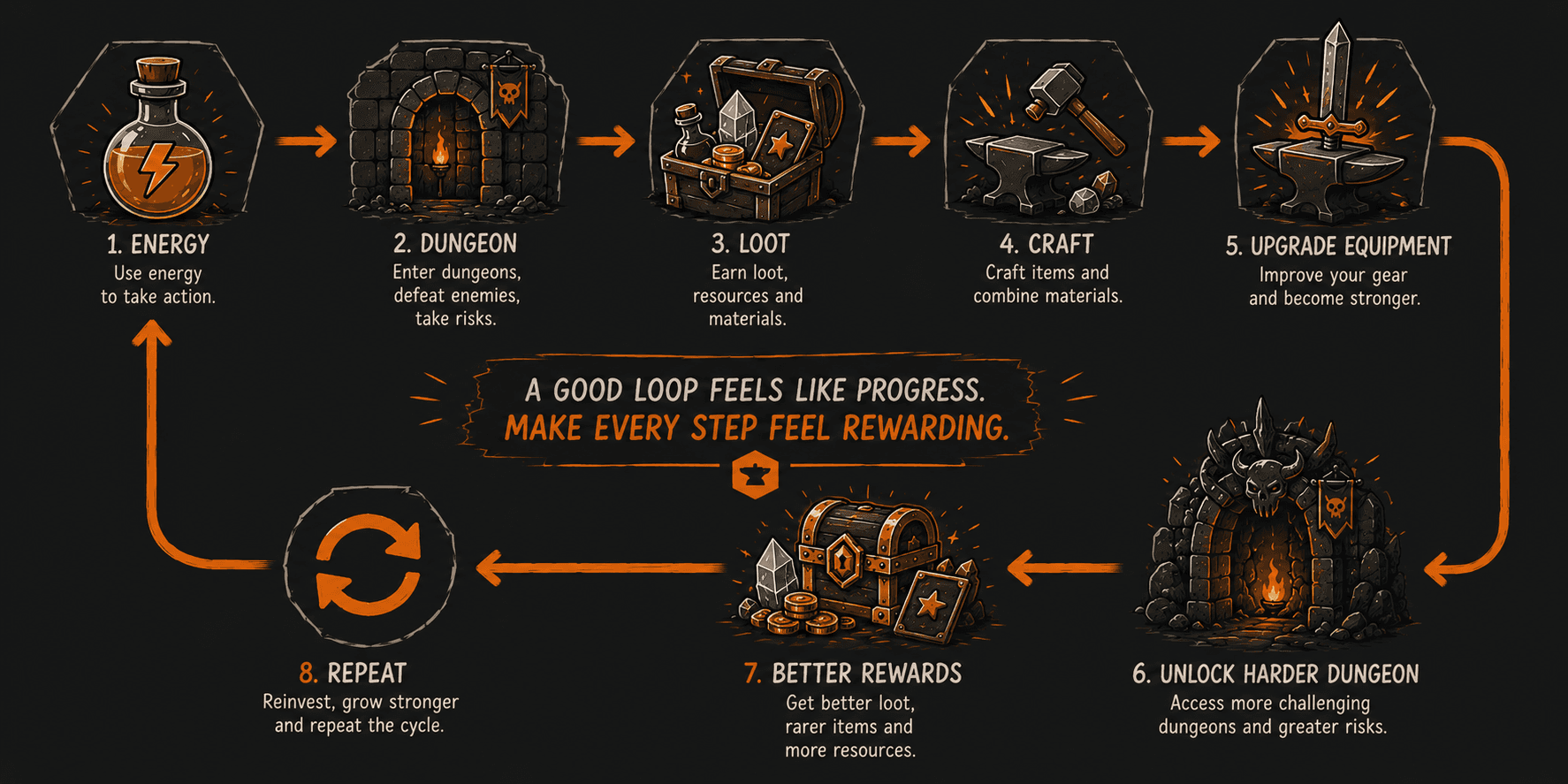
The most satisfying progression systems rarely rely on a single mechanic.
Instead, they layer multiple forms of progression together.
A dungeon consumes energy. Completing it grants loot. Loot unlocks crafting recipes. Crafting improves equipment. Better equipment unlocks harder dungeons. Harder dungeons offer better rewards.
Every mechanic reinforces the next.
The player is almost always progressing in multiple directions at the same time.
Even when the rare drop doesn't appear, experience increases.
Materials accumulate.
Currencies grow.
Achievements advance.
Crafting ingredients become available.
The player leaves feeling stronger than when they started. That feeling is what keeps players coming back.
Test Reward Systems Before Players Do
The biggest challenge in reward design isn't calculating percentages. It is predicting how players will perceive those percentages.
Is my legendary drop rate balanced?
Ask questions like:
- How often does the player receive something meaningful?
- How many unsuccessful runs can happen before frustration appears?
- Does my energy system create anticipation or annoyance?
- Does every play session feel worthwhile?
These questions become much easier to answer when you can simulate progression systems before writing gameplay code.
Ancient Dragon Dungeon Loot Table
A public LudForge loot table example for evaluating meaningful rewards, rare drops, and reward pacing.
Open loot tableEnergy pacing can be evaluated the same way.
Small changes to regeneration time, maximum energy or activity cost completely change how frequently players return to the game. Balancing these numbers early helps avoid progression systems that either burn players out or make them lose interest.
Dungeon Energy Progression
A public LudForge example for reviewing how energy pacing changes dungeon reward progression.
Open loot tableConclusion
Players don't return because your legendary item has a perfectly calculated 2% drop chance.
They return because every session feels rewarding.
Great reward systems aren't built only with mathematics.
They are built around psychology.
The best designers don't simply balance numbers. They balance emotions.
By understanding how players perceive progression, not just how probability works, you can create reward systems that feel fair, motivating and memorable long after the percentages have been forgotten.
Explore the practical example
Open the Ancient Dragon Dungeon loot table to review how reward pacing feels in a public LudForge example.